My Music
MIA ZABELKA — An exceptional artist who pushes the boundaries of sound
There are artists who perform music, others who compose it, and then there are those – far rarer – who seek to push the very boundaries of what we call music. Mia Zabelka undoubtedly belongs to this last category.
A violinist, composer, singer, improviser, sound artist and leading figure on the international electroacoustic scene, this Austrian artist has, for several decades, devoted her thinking to a question as simple as it is perplexing: how far can sound go when we stop imposing limits on it?
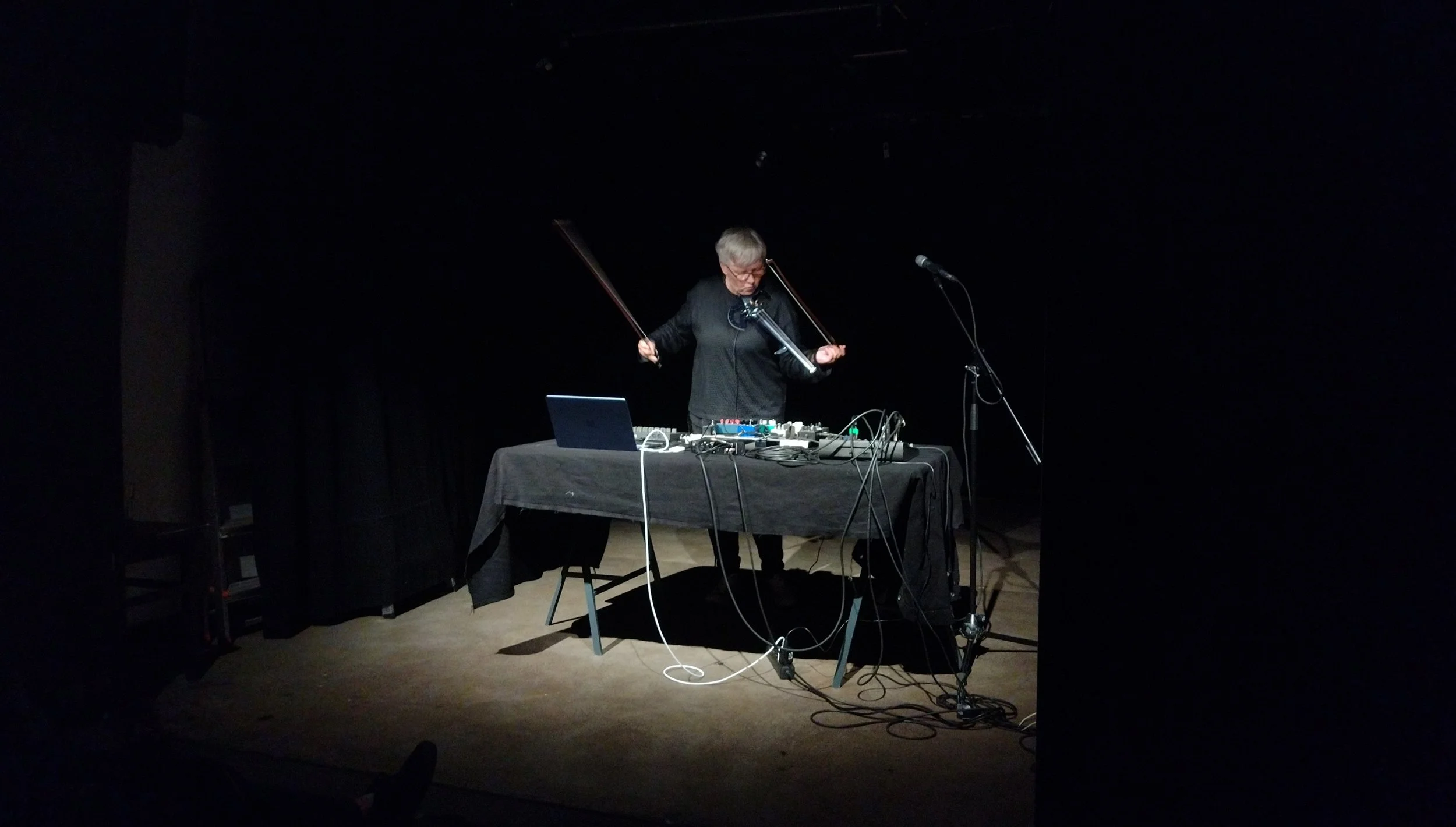
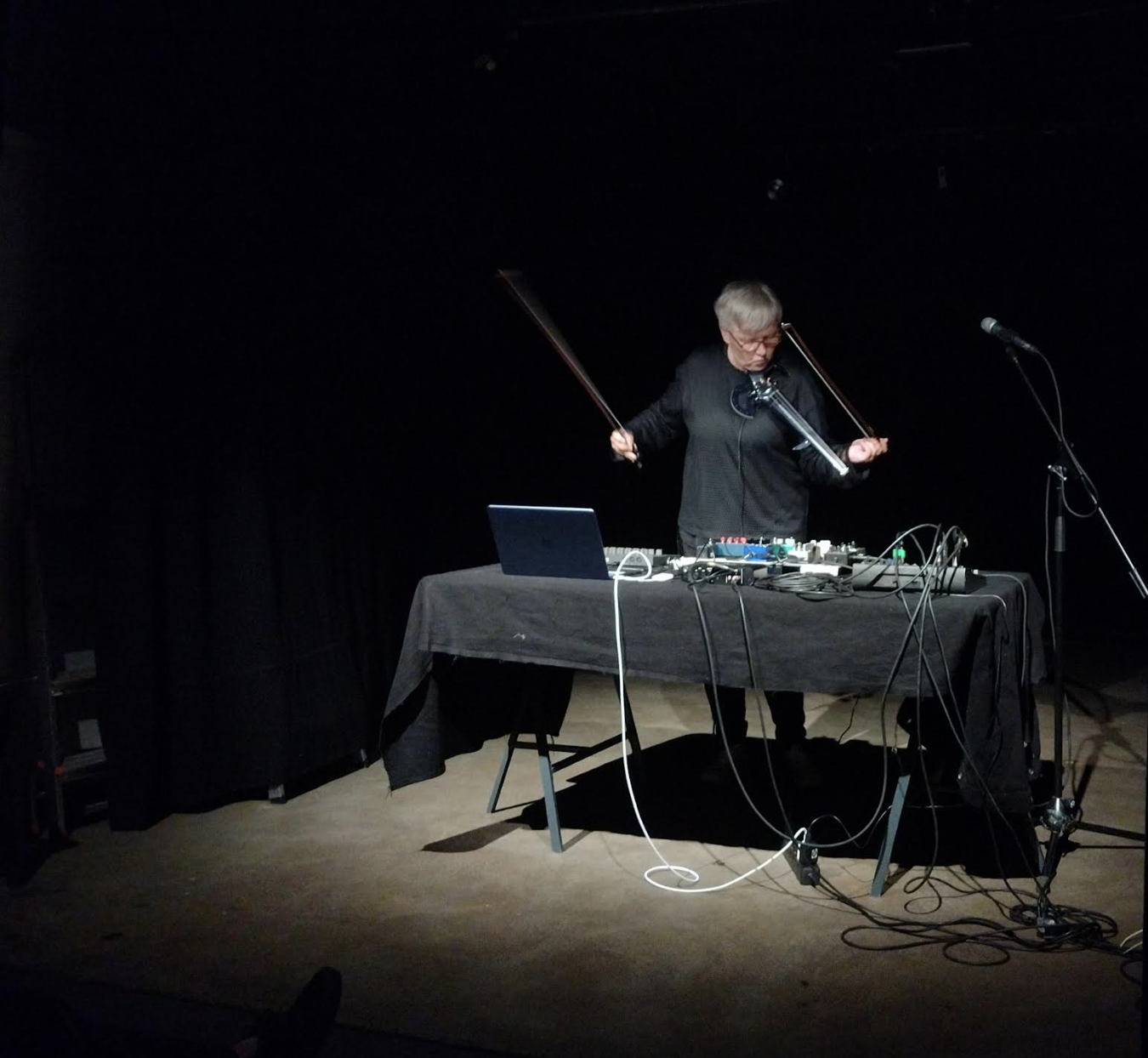
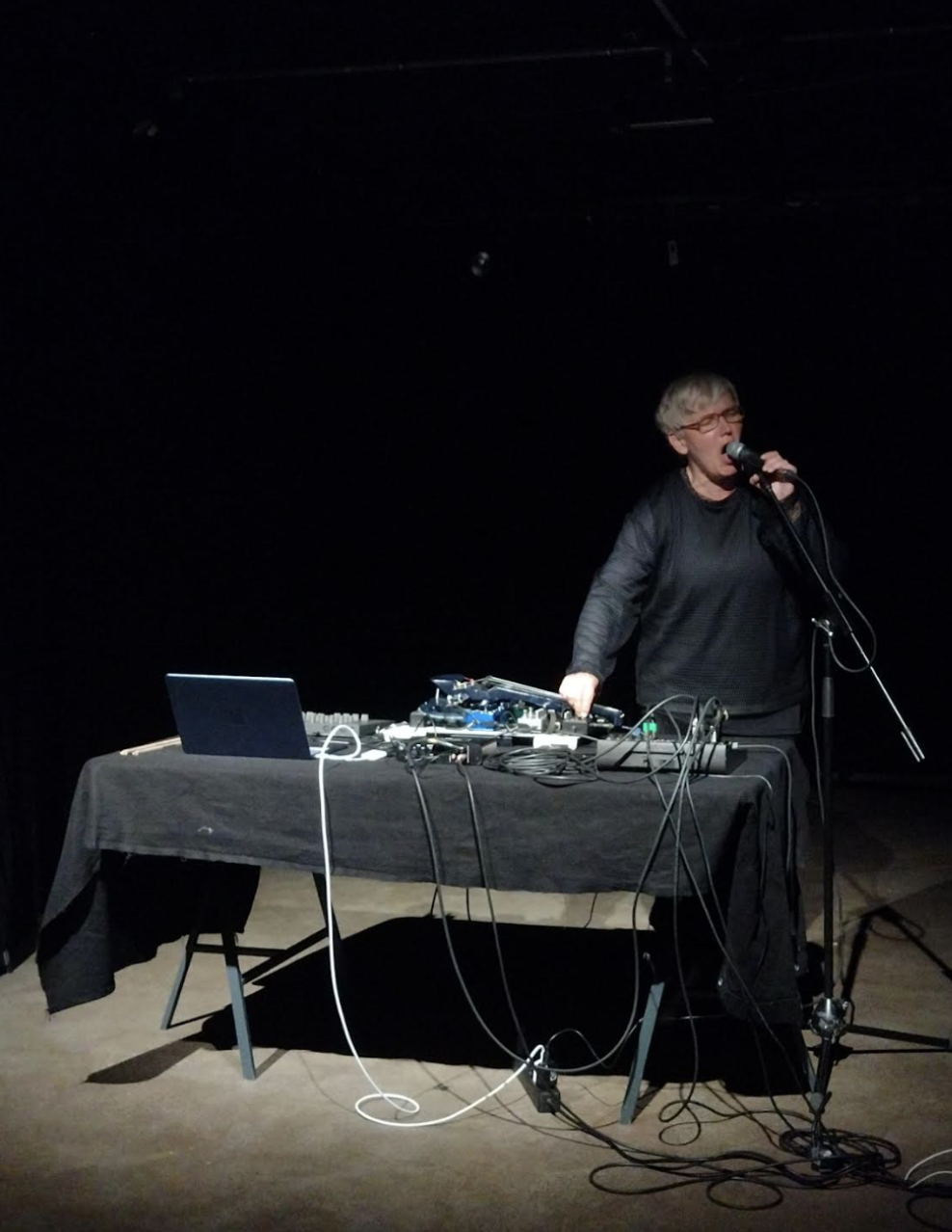
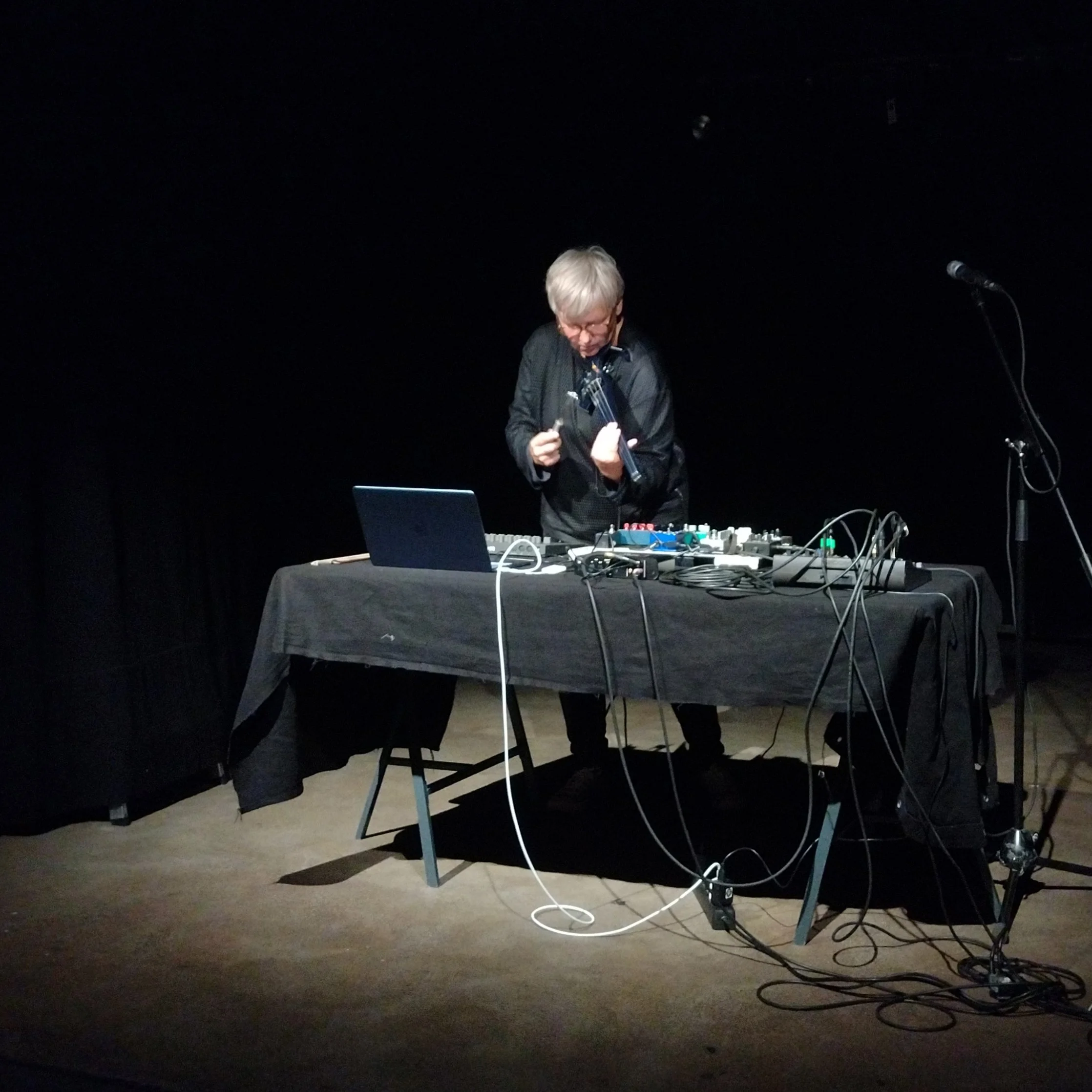
Born in Vienna, Mia Zabelka has forged a deeply personal body of work situated at the crossroads of experimental music, free improvisation, noise, drone, electroacoustics and performance. For her, the violin is never simply a violin. It becomes a living material, an interface, a source of vibrations, textures, breaths, friction and acoustic phenomena. Through the use of electronics, voice, objects and extended playing techniques, she transforms her instrument into a veritable sound laboratory.
A classical training in the service of absolute freedom
Mia Zabelka’s career, however, began in the world of classical music education. She took her first violin lessons at the age of seven and studied with Alexander Arenkov at the Vienna Conservatory, amongst others. But, alongside this training, she was already taking an interest in other musical worlds and playing in jazz and rock bands.
MUK Privatuniversität and MDW Universität für Musik und darstellende Kunst Wien
Her university studies then led her to explore composition, music theory and electroacousticmusic in greater depth under the guidance of leading figures in Austrian music creation, notably Kurt Schwertsik, Dieter Kaufmann and Roman Haubenstock-Ramati.
This solid training, however, never confined her to tradition. On the contrary, it gave her the tools she needed to challenge it more effectively. Very early on, Mia Zabelka realised that the violin could be much more than an instrument designed to produce notes, melodies or harmonies. She therefore set out to deconstruct its traditional language in order to explore its physical, acoustic and electronic dimensions. The result is a radically personal artistic approach: sound is no longer seen as something to be reproduced, but as something to be discovered. The violin as material, body and machine.
One of Mia Zabelka’s most striking characteristics lies in the way she transforms the violin. In her hands, the instrument can produce sounds that sometimes seem a world away from its traditional identity. The strings, the bow, the body of the violin, the voice, objects and electronic devices all become sources capable of generating new forms of sound.
In particular, she uses extended playing techniques, live electronic devices and objects inserted into or applied to the instrument in order to profoundly alter its timbre.
The violin thus becomes, simultaneously:
an acoustic instrument;
an electric instrument;
a technological interface;
an electronic generator;
a performance object;
and a veritable sound machine.
This transformation constitutes one of the cornerstones of her aesthetic.
For Mia Zabelka, sound is no longer merely a succession of notes. It becomes texture, mass, vibration, space, breath, tension, noise, silence and movement. It is precisely this conception that explains why her music can be as delicate as it is radical, as meditative as it is noisy, as organic as it is technological.
An artist at the heart of the international experimental scene
This artistic research has naturally led Mia Zabelka to the major stages of contemporary and experimental creation. Her international career includes numerous collaborations and appearances at festivals and institutions across Europe, the United States and Asia. Her work has notably been presented at major events such as Wien Modern, Ars Electronica, Steirischer Herbst, the Wiener Festwochen, the Salzburger Festspiele, the CTM in Berlin, the Copenhagen Jazz Festival, Rewire and the FIMAV in Victoriaville, amongst many others.
International network
She has also worked with leading figures in improvisation and sound creation, including Pauline Oliveros, Alvin Curran, David Moss and the Zeitkratzer ensemble. These collaborations are not merely encounters between musicians. They bear witness to the place Mia Zabelka occupies within an international artistic community that regards music as a space for research, dialogue and experimentation.
Her career thus illustrates a fundamental conviction: sound art knows no national, stylistic or technological boundaries.
It would be difficult to place Mia Zabelka in a single category.
Is she a violinist? Yes.
A composer? Absolutely.
An improviser? Without a doubt.
A noise artist? She explores those territories.
An electroacoustic artist? She is one of the recognised figures in the field.
A singer, performer, sound researcher, exhibition curator? Again, yes.
But none of these definitions really does justice to her work.
Mia Zabelka operates precisely in the space between these categories.
Her music may begin with an extremely simple gesture and gradually evolve into a complex soundscape. A violin sound can be stretched, transformed, amplified, distorted, layered or juxtaposed with the voice and electronics. The result may evoke organic matter, a natural environment, a machine, a distorted human voice or an imaginary landscape. It is this indeterminacy that gives her work its full power.
The studio: a research laboratory
Mia Zabelka’s work comes into its own when one also takes into account the role of the recording studio. For her, recording is not merely about preserving a performance. The studio can become a place of experimentation, a space where sound is observed, transformed and recomposed.
Every take can lead to a discovery.
Every electronic interaction can open up new possibilities.
Every vibration can become the starting point for a new composition.
This approach is particularly evident in her work with Glen Hall on The Quantum Violin, a project presented as a form of research into the relationship between man and machine. In an interview with mica – music austria, Zabelka described this work as an exploration of the blurring of boundaries between man and technology.
The studio thus resembles a scientific laboratory, but one where measuring instruments are replaced by listening, intuition, the physical presence and the imagination.
The stage: a space for encountering the audience
But this exploration is never confined to the studio.
On stage, Mia Zabelka transforms music into an experience. The performance becomes a moment of direct encounter between the artist, the audience, the space and the vibrations. Her work reminds us that experimental music is not necessarily distant or intellectual. It can be deeply physical.
The audience may not always know exactly how a sound is produced, but they can feel its presence.
A rumbling may spread through the space.
A vibration may create tension.
A silence can become almost palpable.
A voice can emerge as a physical substance.
The violin can suddenly become unrecognisable.
And it is precisely in this zone of uncertainty that the artistic experience comes into its own.
An artist who also creates spaces for others Mia Zabelka’s greatness lies not solely in her personal work.
It is also evident in her commitment to creating spaces where other artists can create. She has contributed to the development of the Klanghaus Untergreith, a centre dedicated to sound art and interdisciplinary creation in southern Styria. Since 2009, she has also been artistic director of PhonoFemme Vienna, a festival dedicated to experimental music and sound art created by women.
This work of passing on knowledge is essential.
A truly committed artist does not merely seek to produce their own work. They also seek to pave the way for future generations. By creating, curating, organising, collaborating and supporting other artists, Mia Zabelka acts as a true cultural catalyst.
She does not merely build a career for herself: she helps to build an artistic ecosystem. International recognition confirming an exceptional body of work
Over the decades, her work has been honoured on numerous occasions. Her career includes several awards for electronic and experimental composition, as well as the WDR Composition Prize and the Luigi Russolo Prize. She has also been invited to take part in international programmes such as those organised by the DAAD and the Fulbright Commission.
Musikprotokoll
In 2018, her composition For Pauline Oliveros, commissioned by musikprotokoll and the Austrian Cultural Forum in New York as part of the Homages project, received an Akademia Music Award.
But one of her most significant honours is undoubtedly the Österreichischer Kunstpreis – Musik 2021, the Austrian Arts Prize in the music category. This prize recognises artists in particular for their life’s work, their artistic contribution and the continuity of their creative development.
MUK Privatuniversität
Since 2012, Mia Zabelka has also been an honorary member of the alumni association of the University of Music and Performing Arts Vienna (MUK).
An artist deeply rooted in the contemporary world
It would, however, be reductive to present Mia Zabelka solely as a pioneer of experimental music. Her work also reflects a desire to remain attuned to the contemporary world.
Her relationship with technology is not one of blind fascination. Rather, she seeks to understand how technologies can transform our relationship with the human, perception, the environment and others.
Music thus becomes a means of reflecting on our times. A time when humans and machines are increasingly intertwined. An era in which the boundaries between the real and the virtual are becoming increasingly difficult to define.
An era in which listening, attention and human connections are sometimes more precious than ever. Seen in this light, Mia Zabelka’s art takes on an almost philosophical dimension.
What does ‘listening’ mean?
What does ‘being human’ mean in a technological world?
Where does the human end and the machine begin?
At what point does a sound become music?
And can we still separate the artist from their instrument, or the instrument from its environment?
Her work does not necessarily provide definitive answers to these questions. It achieves something even more valuable: it invites us to feel them.
An artist serving humanity through the universal language of sound. At the heart of Mia Zabelka’s approach lies, ultimately, a fundamental conviction:
sound belongs to everyone.
Before languages, before borders, before cultural differences, human beings have always lived in a world of sounds.
The beating of the heart.
Breathing.
The voice.
Thunder.
The wind.
Footsteps.
Silence.
Vibrations.
Music extends this primal experience.
This is why Mia Zabelka’s work can be seen as a quest for a language that transcends borders. When she takes to the stage, she is not addressing merely a community of experimental music specialists. She is bringing into play something more universal: the human capacity to listen, to feel, to be surprised and to connect with the unknown. Her art does not seek to confine the audience to a single definition of music. On the contrary, it seeks to restore their freedom to listen.
Mia Zabelka, an artist of the uncharted
To describe Mia Zabelka simply as a violinist would therefore be to oversimplify her. She is a sound researcher, an explorer of the limits of perception, a composer of movement, an artist who transforms technology into an extension of the human and the violin into a laboratory for experimentation. Her instrument can be melodic, fragile, violent, noisy, lyrical, organic, electronic or almost unrecognisable. But behind this diversity lies a constant: the quest for the unprecedented.
The press and cultural institutions have themselves highlighted this unique quality. Ilka Geyer of WDR described her as ‘the inventor of a whole new world of the violin’, whilst other observers have emphasised her ability to blend atmosphere, electronics and improvisation.
This sentence sums up her journey remarkably well.
Mia Zabelka did not merely learn to play the violin.
She sought to discover what else the violin could become.
And this is perhaps the most accurate definition of a great artist: never regarding existing limits as definitive. Listening to the world in a different way Mia Zabelka reminds us that music is not confined to scores, notes or instruments.
It can be a gesture.
A vibration.
A breath.
A substance.
An encounter.
A memory.
A space.
From Vienna to international stages, from classical violin to electroacoustic experimentation, from the studio to the stage, from personal creation to passing on her art, Mia Zabelka has built a body of work that defies boundaries and classifications.
Her career also demonstrates that being an international artist is not simply about performing on the world’s greatest stages. It also means remaining curious about the world, attentive to the times, open to others and capable of placing her art at the service of a broader human experience.
Mia Zabelka thus moves with the times without compromising on what matters most:
listening to human beings,
listening to the world,
listening to silence, and seeking,
in every vibration, a new possibility for connection.
Perhaps, ultimately, her art teaches us this:
As long as there is something we have not yet heard, music has not finished evolving. And it is precisely in this space between the known and the unknown, between the human and the machine, between noise and music, between silence and vibration, that Mia Zabelka continues to invent her own sonic universe.
Yé Lassina Coulibaly
Yé Lassina Coulibaly is a Burkinabè - French musician, composer and musicologist whose work is deeply rooted in West African musical traditions and cultural knowledge. His book L’art des sons, l’art du soin (La Fabrique de Livres, 2022) brings together his experience of music with African cultural perspectives and insights from both African and Western human sciences. The book explores music not only as an artistic practice but also as a form of cultural transmission, social connection and care, making Coulibaly’s work particularly relevant to ethnomusicological approaches to the social and political functions of music.